
Most Edinburgh homeowners assume they need planning permission before touching their garage. In practice, the majority of standard garage conversions in Scotland qualify as permitted development, meaning no formal planning application is required at all. But that assumption can be expensive if you get it wrong. The rules around garage conversion planning permission Scotland are specific, and the consequences of skipping the right checks range from enforcement notices to problems when you sell. This guide cuts through the confusion so you know exactly where you stand before a single tool is lifted.
Table of Contents
- Quick Takeaways
- Permitted Development in Scotland: What It Actually Means
- When Planning Permission Is Required for a Garage Conversion
- Building Warrant: The Requirement Most People Miss
- Garage Conversion Regulations Edinburgh and the Lothians
- Comparison of Approval Routes for Garage Conversions
- Listed Buildings and Conservation Areas in Edinburgh
- Common Mistakes That Create Costly Delays
- Frequently Asked Questions
- References
Quick Takeaways
|
Key Insight |
Explanation |
|---|---|
|
Most garage conversions are permitted development |
Converting an integral or attached garage to habitable space usually does not need a planning application in Scotland, provided the footprint and external appearance change minimally. |
|
A Building Warrant is almost always required |
Even when planning permission is not needed, a Building Warrant from your local council is legally required for any garage conversion in Scotland. This is non-negotiable. |
|
Detached garages carry more restrictions |
Converting a detached garage into separate living accommodation, such as an annex, is more likely to trigger a full planning application requirement. |
|
Conservation areas change everything |
Properties in Edinburgh’s New Town or other designated conservation areas face additional consent requirements even for changes that would otherwise be permitted development. |
|
Conditions on your title deeds can override permitted development |
Some Edinburgh properties carry title conditions or deed restrictions that prevent garage conversions regardless of planning rules. A solicitor check is essential. |
|
Losing a parking space can trigger a planning requirement |
If your property has no alternative off-street parking and converting the garage removes the only parking provision, Edinburgh City Council may require a planning application. |
|
Completion certificates matter for resale |
Without a Building Warrant completion certificate, mortgage lenders and solicitors will flag the conversion as non-compliant during a property sale, which can collapse a transaction. |
Permitted Development in Scotland: What It Actually Means
In Scotland, permitted development rights are governed by the Town and Country Planning (General Permitted Development) (Scotland) Order 1992, as amended. These rights allow certain types of building work to proceed without a formal planning application. Converting an existing garage to habitable space, such as a bedroom, home office, or utility room, generally falls within these rights for most standard residential properties.
The critical word here is “generally.” Permitted development is not a blanket exemption. It applies when the work does not materially alter the external appearance of the property, does not increase the overall footprint, and does not involve a change of use that creates a separate self-contained dwelling.
In practice, the vast majority of integral garage conversions, those built into the main body of the house, and attached single-storey garages qualify as permitted development in Scotland. You are essentially reclassifying space that already exists within or directly attached to your home.
Pro tip: Before assuming you have permitted development rights, check whether your property has had those rights removed by a prior planning condition. This is common on newer housing estates in areas like Livingston, Bathgate, and parts of South Edinburgh. Your council’s planning portal will show any Article 4 Directions that remove these rights locally.
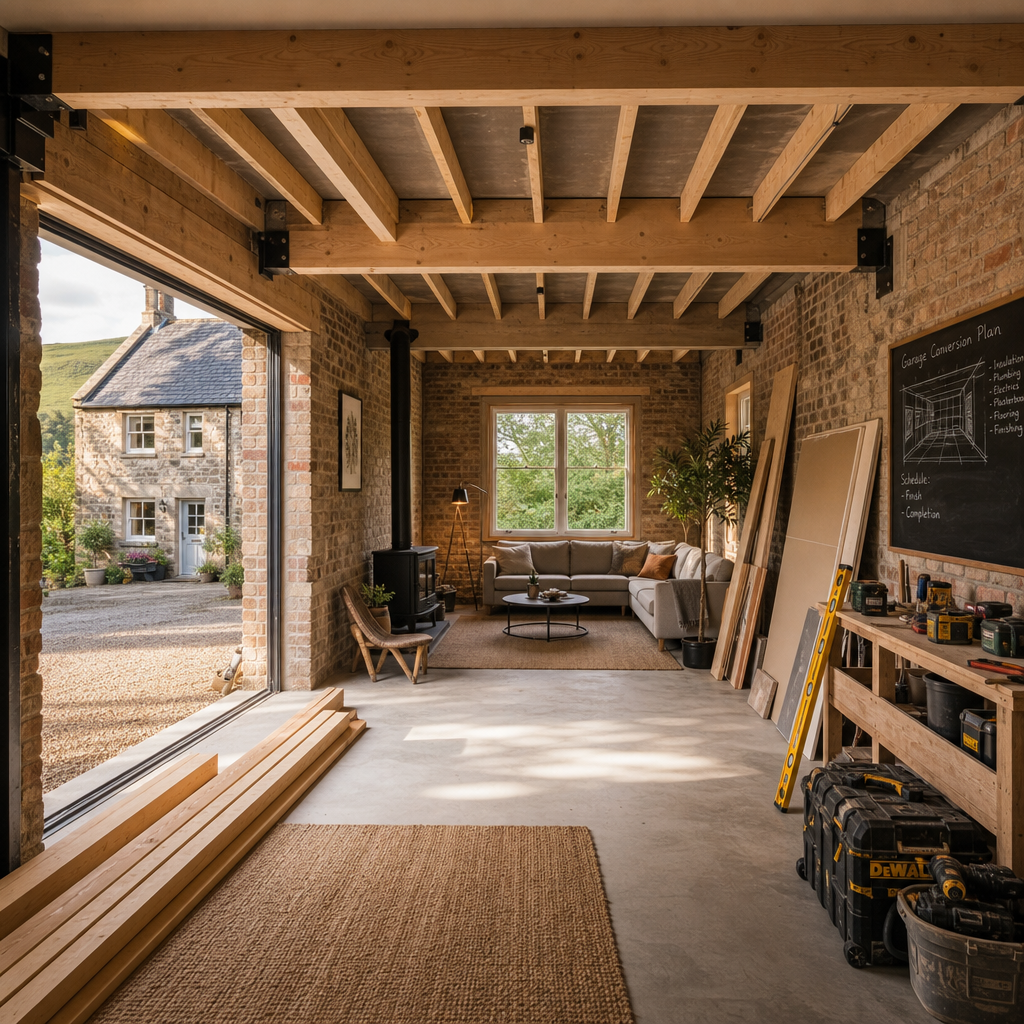
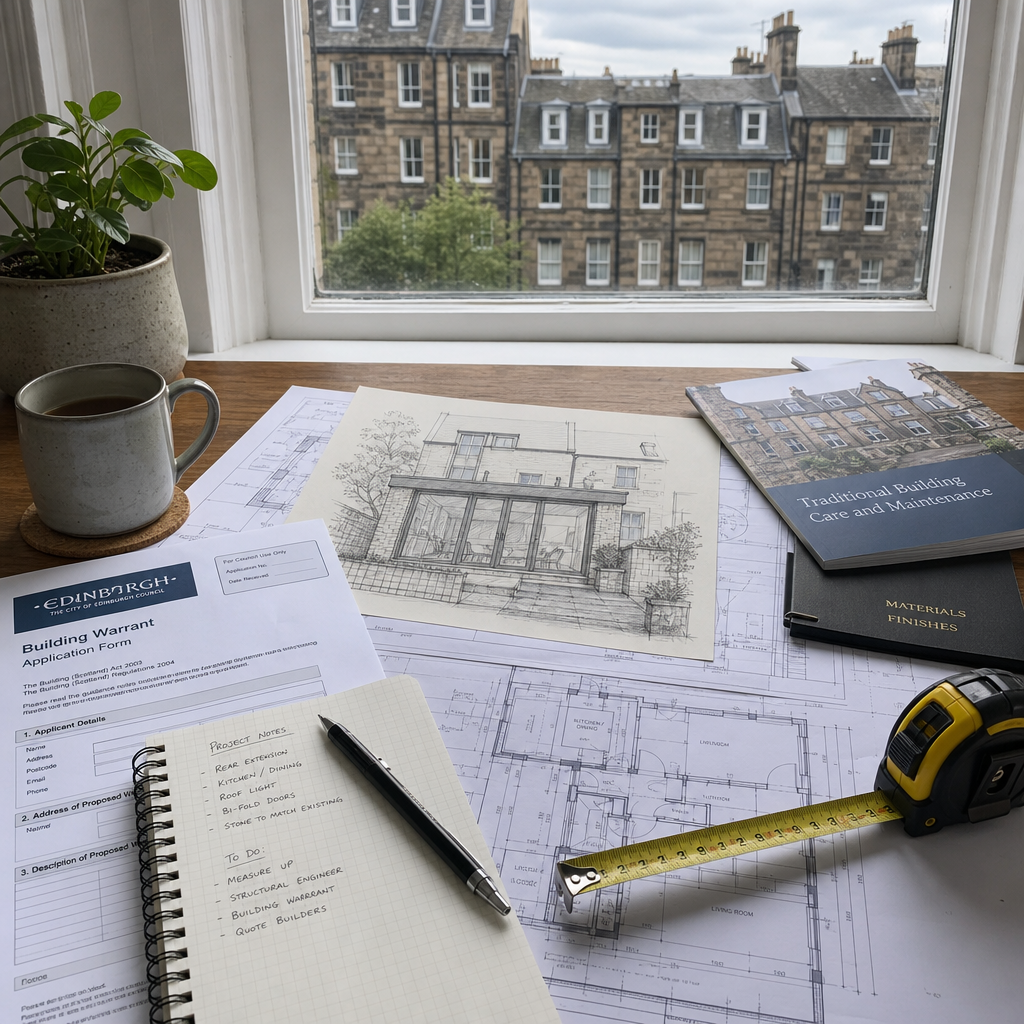
What “Materially Altering External Appearance” Means in Practice
Blocking up a garage door and replacing it with a window and wall infill does change the external appearance of your home. However, Scottish planning authorities generally consider this acceptable under permitted development because the overall mass and height of the building remain unchanged. The change is cosmetic rather than structural in planning terms.
Where you can run into trouble is if you plan to add a dormer window, raise the roofline, or extend the structure as part of the conversion. Any of those additions step outside standard permitted development and will require a planning application in their own right.
When Planning Permission Is Required for a Garage Conversion
There are specific scenarios where a full planning application to your local planning authority is unavoidable. Knowing these in advance saves weeks of delay and protects your investment.
Converting to a Self-Contained Dwelling or Annex
If you want to create a fully independent living unit with its own kitchen, bathroom, bedroom, and separate entrance, this represents a material change of use. It moves from “ancillary residential use” to a separate dwellinghouse in planning terms. You will need a planning application, and approval is not guaranteed, particularly in areas where local development plans restrict subdivisions of residential properties.
Detached Garage Conversions Used as Separate Accommodation
A detached garage converted into a home office or hobby room typically remains permitted development. But convert that same detached garage into a self-contained flat or granny annexe with independent living facilities and you are almost certainly looking at a planning application. The physical separation from the main house strengthens the planning authority’s case that this is a new dwellinghouse rather than an extension of the existing home.
Properties Where Permitted Development Has Been Removed
Article 4 Directions allow councils to remove permitted development rights in specific areas. Edinburgh City Council has applied these in conservation areas across the city. If your garage is within such an area, you need planning permission even for a straightforward integral conversion. The Planning Portal Scotland and Edinburgh City Council’s online mapping tools allow you to check your property’s status in under five minutes.
Pro tip: Submitting a “prior notification” enquiry to Edinburgh City Council before starting work costs nothing and provides written confirmation that your conversion falls within permitted development. This document is invaluable when you come to sell the property.
Building Warrant: The Requirement Most People Miss
This is the area where homeowners most frequently get caught out. Planning permission and building warrants are entirely separate legal requirements. You can have permitted development rights and still be legally required to obtain a Building Warrant before starting work.
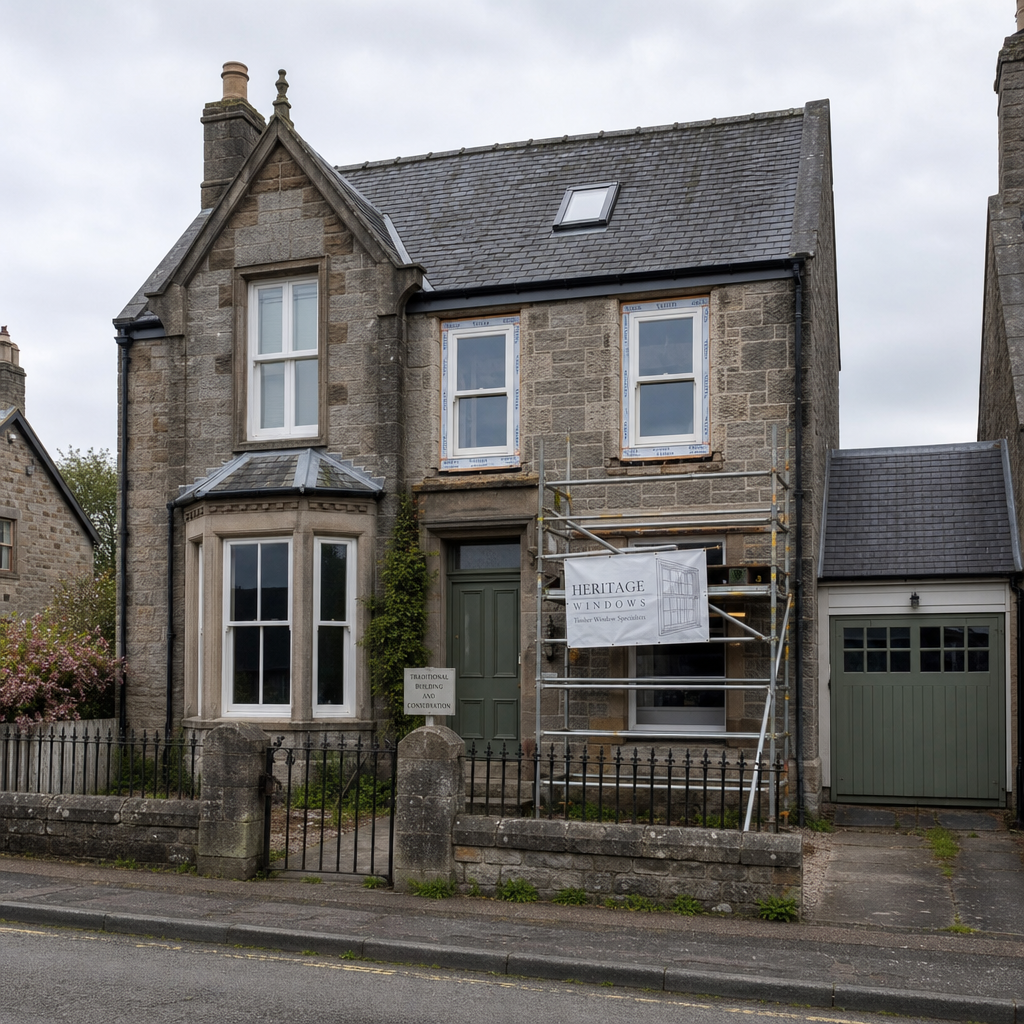
Under the Building (Scotland) Act 2003, a Building Warrant is required for any conversion of a garage into habitable accommodation in Scotland. The warrant ensures the finished space meets the standards set out in the Scottish Technical Handbooks, which cover structural integrity, fire safety, thermal performance, ventilation, and damp proofing.
What Building Regulations Cover in a Garage Conversion
The technical requirements for a compliant garage conversion in Scotland are more demanding than many homeowners expect. The floor must be insulated and damp-proofed to meet current standards. Walls must achieve minimum U-values for thermal performance. Ventilation must comply with Section 3 of the Technical Handbooks. Fire safety provisions, including escape windows and smoke detection, must meet Section 2 requirements.
These are not optional extras. A Building Warrant inspector from your local council, whether Edinburgh, East Lothian, Midlothian, or West Lothian, will check compliance at various stages of the build and issue a completion certificate when satisfied.
The Cost and Timeline for a Building Warrant in Edinburgh
Building Warrant fees in Scotland are calculated on the value of the proposed work. For a garage conversion with a contract value of around £15,000 to £20,000, expect to pay in the region of £300 to £500 in warrant fees. The application typically takes four to eight weeks to be processed by Edinburgh City Council, though this can vary. Factor this timeline into your project planning from the start.
Garage Conversion Regulations Edinburgh and the Lothians
While the underlying legislation is Scotland-wide, individual councils apply and interpret the rules with some local variation. Understanding the specific approach taken by Edinburgh City Council and the Lothian councils will save you time and prevent surprises mid-project.
Edinburgh City Council takes a particularly close interest in off-street parking provision. The council’s Local Development Plan includes policies protecting residential amenity, and removing the only off-street parking from a property in an area of high parking pressure, which covers much of inner Edinburgh, can be grounds for requiring a planning application even for an otherwise permitted development conversion.
East Lothian, Midlothian, and West Lothian Councils
The three Lothian councils broadly follow the same Scottish planning framework. East Lothian Council tends to be more straightforward on standard conversions in suburban and rural areas where parking is less constrained. Midlothian Council has been active in reviewing developments in the fast-growing Shawfair and Danderhall corridors. West Lothian Council applies standard permitted development rules across most of its residential areas, though Linlithgow conservation area carries the same restrictions as Edinburgh’s designated zones.
Factored Properties and Flat Developments
If your property is within a factored development, a common arrangement in newer Edinburgh suburbs and some older tenement conversions, you may need consent from the factor or the owners’ association before proceeding with a garage conversion. This is separate from both planning permission and a Building Warrant, and ignoring it can result in legal action from co-owners or your factor.
Comparison of Approval Routes for Garage Conversions
|
Route |
When It Applies |
Typical Timeline and Cost |
|---|---|---|
|
Permitted Development (No Planning Application) |
Standard integral or attached garage converted to habitable room, no change of use to separate dwelling, not in a conservation area or Article 4 zone |
No planning fee. Building Warrant still required: 4 to 8 weeks, £300 to £500 in fees. |
|
Full Planning Application Required |
Conversion to self-contained annex or flat, detached garage as separate dwelling, property in conservation area, permitted development rights removed by condition |
Planning fee of around £202 for householder applications in Scotland. Decision in 2 to 3 months. Building Warrant still required separately. |
|
Prior Notification Confirmation |
Optional but recommended for any conversion where you want written confirmation from the council that no planning permission is needed |
No fee. Response typically within 4 weeks. Provides documentary evidence for future sale of the property. |
Listed Buildings and Conservation Areas in Edinburgh
Edinburgh has one of the highest concentrations of listed buildings and conservation areas in the United Kingdom. The New Town and Old Town together form a UNESCO World Heritage Site. If your property sits within any of these designations, the planning rules are significantly stricter than the standard permitted development framework.
For a listed building, you need Listed Building Consent for any works that affect the character of the building, including internal alterations. Converting an integral garage within a listed townhouse to a habitable room almost certainly requires Listed Building Consent. The application is assessed by Edinburgh City Council’s Conservation Officers, and the bar for approval is high.
“The primary purpose of listing is to protect the special historic or architectural interest of a building. Any works, including internal alterations, that would affect that interest require Listed Building Consent.” Historic Environment Scotland, Managing Change in the Historic Environment guidance series.
Conservation area designation does not automatically require planning permission for a garage conversion, but it does restrict the types of external alterations you can make without consent. Replacing a traditional timber garage door with a rendered wall and aluminium window frame, for example, might be resisted by the council on character grounds even if the conversion itself is permitted development.
How to Check If Your Property Is Affected
Historic Environment Scotland maintains the online Designations Database, which shows all listed buildings and scheduled monuments. Edinburgh City Council’s online planning portal shows conservation area boundaries. Both searches take less than five minutes and should be your first step before any garage conversion project in the city.
Common Mistakes That Create Costly Delays
A common mistake is starting construction before the Building Warrant is issued. Some homeowners believe that because no planning permission is needed, they can proceed immediately. This is wrong. Starting work without a warrant puts you in breach of the Building (Scotland) Act 2003. The council can require you to open up completed work for inspection, or in serious cases, to demolish and reinstate. Neither outcome is acceptable on a project that starts at £12,000.
A second common error is failing to notify the council’s building standards department at the correct inspection stages. The warrant is not a one-off approval. The inspector needs to visit at foundation or floor slab level, at the insulation stage, and before plastering covers the walls. Miss an inspection and you may need to open up finished surfaces to prove compliance.
A third mistake is assuming that because a neighbour successfully converted their garage without visible complications, the same rules apply to your property. Title deeds, planning conditions, and conservation area boundaries are property-specific. What applies to number 14 does not automatically apply to number 16, even on the same street.
Pro tip: Always request a copy of the approved Building Warrant drawings and the completion certificate before your contractor submits final invoices. These documents belong to the property and you will need them for any future sale or remortgage.
Frequently Asked Questions
Do I need planning permission for an integral garage conversion in Edinburgh?
In most cases, no. Converting an integral garage, one that is built into the body of the house, to a habitable room is generally permitted development in Scotland. However, you must check that no planning conditions on your property remove those rights, that the property is not in a conservation area with additional restrictions, and that you are not creating a self-contained dwelling unit. A Building Warrant is still required regardless of whether planning permission is needed.
What is the difference between planning permission and a Building Warrant in Scotland?
Planning permission controls what you build and how it looks in relation to land use policy. A Building Warrant confirms that the technical standards set out in the Scottish Technical Handbooks are met, covering structure, fire safety, insulation, ventilation, and drainage. The two systems are entirely separate. Most garage conversions in Scotland do not need planning permission but all of them require a Building Warrant under the Building (Scotland) Act 2003.
Can I convert a detached garage into a granny flat in Edinburgh without planning permission?
Not if the result is a self-contained dwelling with its own kitchen, bathroom, and independent access. This constitutes a material change of use in planning terms and requires a full planning application. If you are converting a detached garage into a room or studio used as part of the main dwelling, without independent living facilities, the position is more favourable, but you should still seek written confirmation from Edinburgh City Council before proceeding.
How long does it take to get a Building Warrant for a garage conversion in Edinburgh?
Edinburgh City Council typically processes straightforward Building Warrant applications within four to eight weeks. More complex applications, particularly those involving listed buildings or requiring detailed structural calculations, can take longer. Submit your application with complete drawings and structural information to avoid requests for further details that will extend the timeline. Factor this processing time into your project schedule before agreeing a start date with your contractor.
What happens if I sell my house and the garage conversion has no Building Warrant completion certificate?
This is a serious problem. Your solicitor is required to disclose the conversion to the buyer’s solicitor. Without a completion certificate, the buyer’s mortgage lender will almost certainly refuse to lend against the property until the matter is resolved. Resolving it retrospectively involves applying for a Building Warrant in hindsight, which is a complex and expensive process called a regularisation certificate application, and there is no guarantee the council will grant it if the work does not meet current standards.
Are permitted development rights for garage conversions the same across Scotland?
The baseline legislation is the same Scotland-wide, but local authorities can and do modify these rights through Article 4 Directions. Edinburgh City Council has applied Article 4 Directions in conservation areas across the city. East Lothian, Midlothian, and West Lothian have their own locally specific directions. Always check with the specific council whose area your property falls within, and do not assume that rules applying in one area of Edinburgh or the Lothians apply everywhere else.
If you have recently completed a garage conversion in Edinburgh or the Lothians, share what the planning and warrant process looked like for your property in the comments below.
We would love your feedback and any insights you would share with others. What perspective would you add?
References
-
Scottish Government official guidance on planning and building standards regulations in Scotland
-
Historic Environment Scotland guidance on listed buildings and conservation area consents
-
Edinburgh City Council planning and building standards department information for homeowners
-
Full text of the Building (Scotland) Act 2003 and related statutory instruments