
Most Edinburgh homeowners sitting on an unused garage are leaving serious money on the table. A well-executed garage conversion property value Edinburgh project consistently adds between 10% and 20% to a property’s market value, according to data from Nationwide Building Society. In a city where average house prices have climbed past £310,000, that translates to genuine, life-changing equity. This guide breaks down exactly how conversions create value, what the Edinburgh market specifically responds to, and where homeowners typically go wrong before they have spent a single pound.
Table of Contents
- Quick Takeaways
- How Much Value Does a Garage Conversion Add in Edinburgh?
- Why the Edinburgh Property Market Rewards Conversions
- Best Uses for a Converted Garage to Maximise Return
- Comparing Garage Conversion Approaches
- Planning and Building Regulations in Edinburgh
- Cost vs Return Breakdown
- Mistakes That Reduce Your Return
- Frequently Asked Questions
- References
Quick Takeaways
| Key Insight | Explanation |
|---|---|
| 10% to 20% added value | A properly finished garage conversion adds a verified percentage uplift to Edinburgh property prices, based on Nationwide Building Society research. |
| Conversions cost far less per square metre than extensions | Starting from £12,000 with Revamp Joinery, a garage conversion delivers new living space at a fraction of the cost of a traditional extension. |
| Edinburgh’s housing shortage amplifies returns | Low housing stock in Edinburgh means additional habitable rooms are disproportionately attractive to buyers and add significant premium. |
| Permitted Development Rights often apply | Many Edinburgh garage conversions do not require full planning permission, reducing delays and costs substantially. |
| Room purpose matters as much as the build itself | Converting to a home office or bedroom delivers higher buyer appeal than a games room or hobby space in the current Edinburgh market. |
| Bespoke joinery increases perceived value | Custom fitted storage, shelving, and finishes signal quality to valuers and buyers, often lifting achievable sale prices beyond the cost of the joinery itself. |
| Poor insulation is the most common costly mistake | Edinburgh’s climate demands high-spec insulation. Under-insulated conversions fail building regulations and depress property value rather than raising it. |
How Much Value Does a Garage Conversion Add in Edinburgh?
The headline figure from Nationwide Building Society is a 10% to 20% uplift. Applied to Edinburgh’s current average house price of around £310,000, that means a completed conversion can realistically add £31,000 to £62,000 in market value. When the conversion itself costs from £12,000, the return on investment is hard to ignore.
In practice, the actual uplift depends on three things: the quality of the build, the function of the new room, and how the conversion is presented to buyers or valuers. A conversion that meets building regulations, is properly insulated for Edinburgh’s climate, and uses quality joinery finishes will always sit at the top of that range. A conversion with cold walls, a damp floor, and flat-pack fittings will sit at the bottom, or may actively put buyers off.
The Edinburgh market is also specific. Buyers here are educated and competitive. They know the difference between a conversion that has been done properly and one that has corners cut. This is not a city where a superficial renovation fools anyone for long.
How Valuers Assess Converted Garages
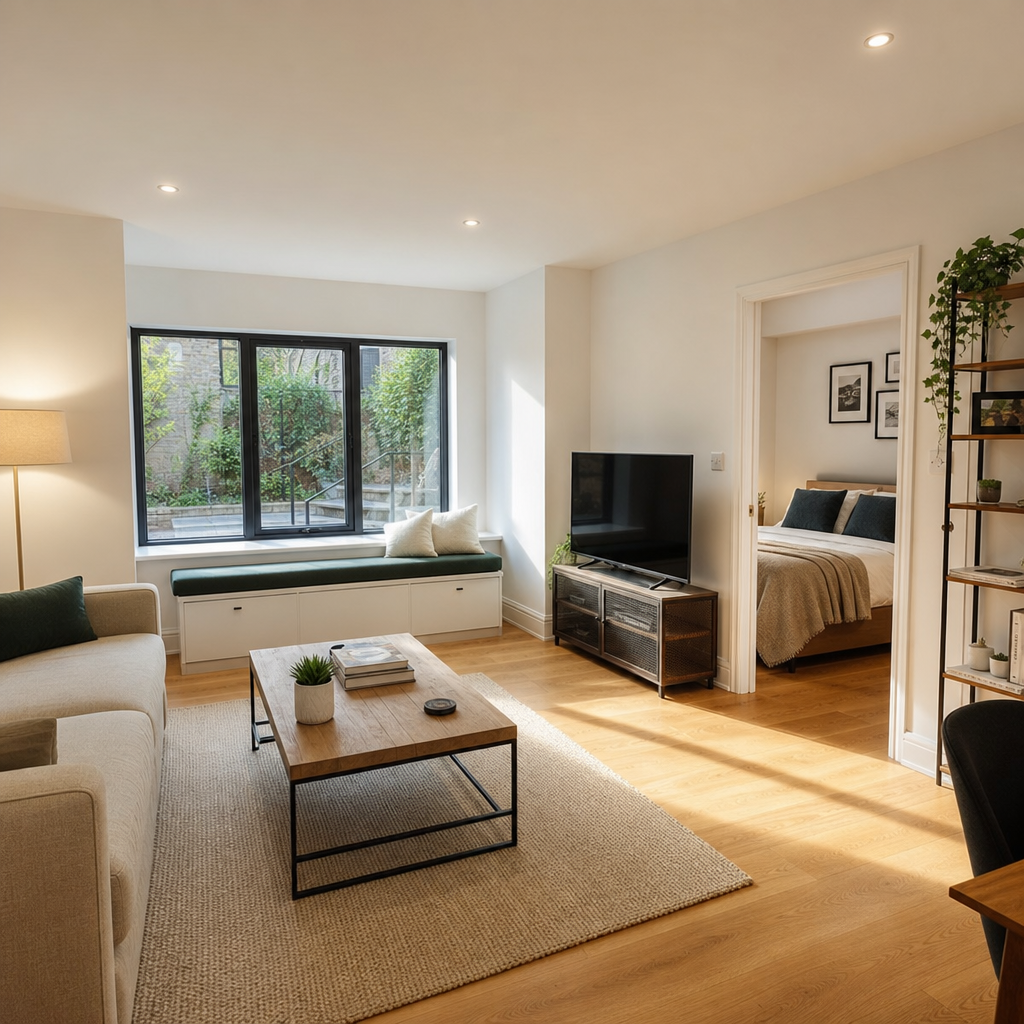
A surveyor valuing a property with a converted garage will check whether the conversion has building regulation completion certification. Without it, the additional space may not be counted as habitable accommodation in the formal valuation. This single factor can mean the difference between the conversion adding £40,000 or adding nothing to the assessed value.
Valuers also assess the quality of the finish, whether the space functions as a genuine room rather than a storage area with better lighting, and whether the thermal envelope of the conversion matches the rest of the house. In Edinburgh, where temperatures regularly drop below 5 degrees Celsius through winter, a poorly heated converted garage registers immediately as a problem.
Pro tip: Always obtain building regulation completion certification before listing your property for sale. Without it, buyers’ solicitors in Scotland will flag the conversion as non-compliant, which can delay or collapse sales at the worst possible moment.
Why the Edinburgh Property Market Rewards Conversions
Edinburgh has a structural housing shortage. The city’s population grew by over 14% between 2001 and 2021, according to National Records of Scotland, while new housing completions have consistently failed to keep pace. This supply-demand imbalance means any additional habitable room in an established residential area commands a premium.
The shift to hybrid and remote working has also had a measurable effect. Rightmove reported that searches including the term “home office” rose by over 500% in the period following 2020. In Edinburgh specifically, where many residents commute to financial services or tech roles, a dedicated home office room is no longer a luxury feature. It is an expected one among buyers at the mid-to-upper end of the market.
“The addition of a habitable room through a garage conversion remains one of the most cost-efficient ways to add verifiable square footage to a property, particularly in cities where land supply is constrained.” – Nationwide Building Society Housing Research
The Lothians present a slightly different picture. Buyers in areas like Musselburgh, Livingston, Penicuik, and Dalkeith are often upsizing families who prioritise practical space over prestige finishes. Here, a converted garage used as a fourth bedroom or a utility-and-laundry room can be the deciding factor in a sale, particularly when competing homes nearby lack it.
New Build Competition and Why It Favours Conversions
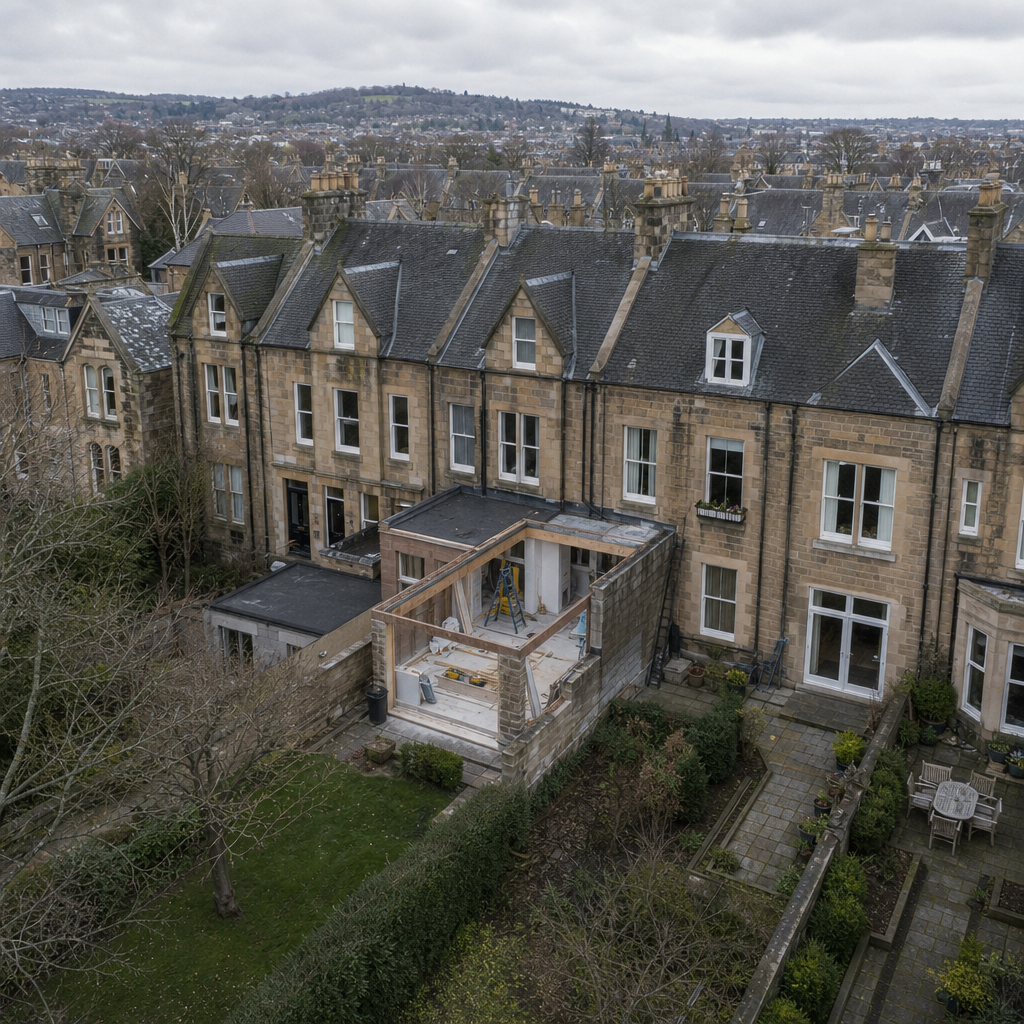
New build developments across Edinburgh and the Lothians rarely include garages now, or include minimal ones. Buyers who want a home with genuine, flexible extra space are increasingly looking at existing stock rather than new builds. A converted garage in a 1970s or 1980s property in Corstorphine, Liberton, or Fairmilehead gives that buyer exactly what the new build market cannot offer: space that is already finished, in an established neighbourhood, often with a larger garden.
This is a real structural advantage for homeowners considering a conversion. They are not just improving their own property. They are positioning it in a part of the market that new builds simply do not serve.
Best Uses for a Converted Garage to Maximise Return
Not all conversion uses are equal from a valuation perspective. The data and practical experience both point clearly to a hierarchy of room types by their impact on resale value in the Edinburgh market.
Home Office
A dedicated home office is the highest-demand conversion use in Edinburgh right now. Separated from the main living area, with natural light and proper insulation, a home office adds functional value that buyers in professional roles will actively pay more for. Bespoke joinery, specifically fitted desks, shelving, and cable management, significantly increases the perceived quality of the space.
Additional Bedroom
Adding a bedroom increases the official bedroom count of the property, which directly affects its category in comparative valuations. A three-bedroom home in Morningside or Marchmont is valued in a fundamentally different bracket from a two-bedroom one. If the conversion creates a bedroom with an en suite, the uplift is even more pronounced.
Playroom or Family Room
A dedicated family room or playroom appeals strongly to upsizing buyers in the Lothians, particularly in areas like Bonnyrigg, Haddington, and Bathgate where family homes are in demand. This use type adds value, though it sits below home office and bedroom in terms of pure uplift percentage.
Gym or Wellness Space
A gym conversion is the most polarising option. It appeals strongly to a specific type of buyer but may actively put off others who would prefer a neutral habitable room. The recommendation here is clear: unless you are converting for personal use with no near-term plan to sell, design the space to function as either a gym or a bedroom, not exclusively one.
Pro tip: If you are converting specifically to add value before a sale, prioritise a bedroom with fitted wardrobes over a gym. Bedroom count is a direct valuation variable. Gym use is not.
Comparing Garage Conversion Approaches
| Approach | Typical Cost Range | Value Added vs Cost |
|---|---|---|
| Full professional conversion with bespoke joinery (e.g., Revamp Joinery) | From £12,000, end-to-end | Highest return. Building regulation certified, fully habitable, valuer-ready. Estimated uplift of 15% to 20% on Edinburgh average prices. |
| Partial DIY or trade-only finish | £6,000 to £10,000 estimated | Lower return. Risks failing building regulations. Surveyors may not recognise the space as habitable. Potential liability on sale. |
| Conversion to utility or storage room only | £3,000 to £7,000 estimated | Minimal uplift. Adds convenience but does not change bedroom count or habitable floor area classification. Lower return on investment. |
The comparison above is direct and intentional. A partial or DIY conversion that does not achieve building regulation sign-off is not a cheaper version of a proper conversion. It is a different outcome entirely, and often a worse one financially. The certification is not a formality. It is what converts the physical work into verifiable, transferable property value.
Planning and Building Regulations in Edinburgh
A common mistake is conflating planning permission with building regulations. They are separate requirements and both must be considered before starting a conversion in Edinburgh or the Lothians.
Planning Permission
Most internal garage conversions fall within Permitted Development Rights in Scotland and do not require a planning application. The key conditions are that the external appearance of the property does not change significantly and that the property is not in a conservation area or subject to an Article 4 Direction removing permitted development rights. Edinburgh has several conservation areas where additional rules apply, including parts of the New Town, Morningside, and Cramond.
Always confirm with City of Edinburgh Council or East Lothian, Midlothian, or West Lothian Council before starting work, even if you believe permitted development applies. A Certificate of Lawfulness is a low-cost way to confirm this in writing and protects you on sale.
Building Regulations
Building regulations apply to all garage conversions regardless of whether planning permission is needed. In Scotland, these are administered under the Building (Scotland) Act 2003. The conversion must meet standards for thermal insulation, ventilation, fire safety, structural stability, and electrical installations.
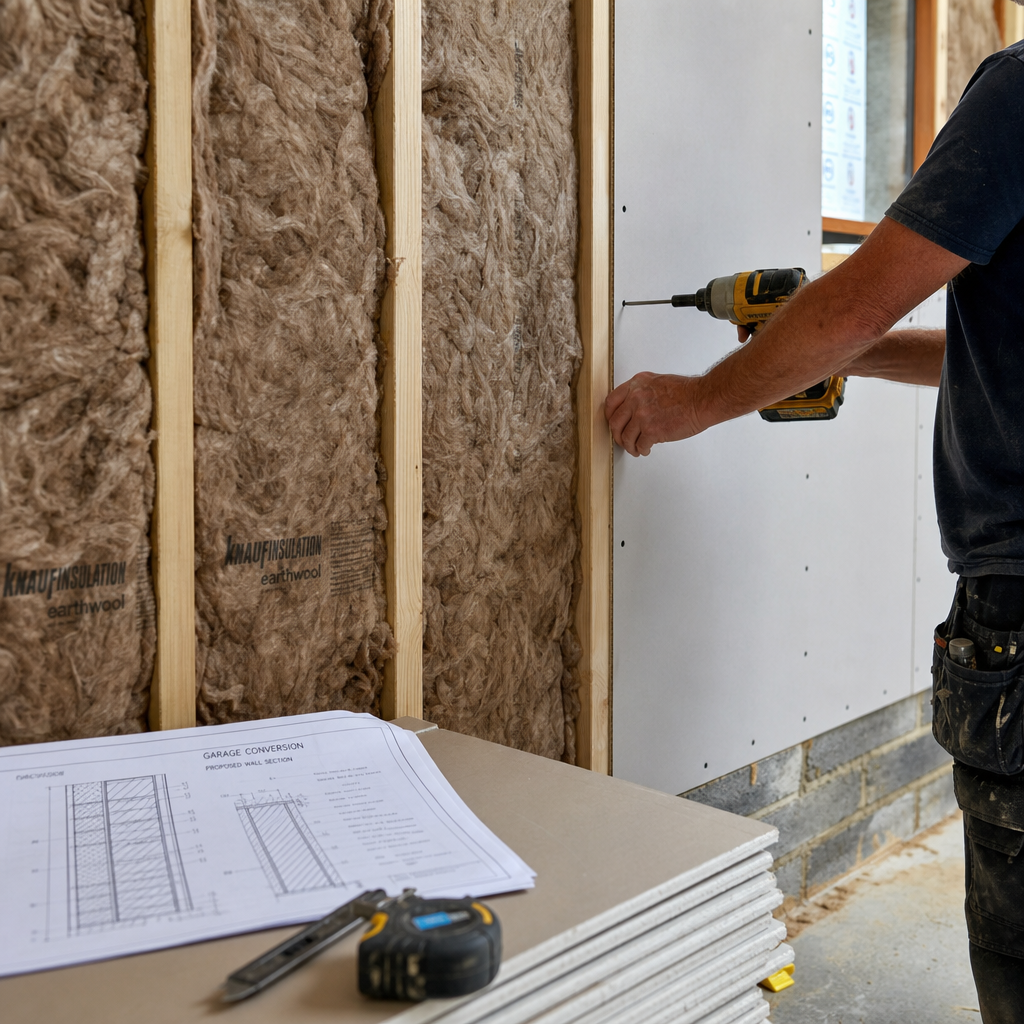
Edinburgh’s climate makes the thermal insulation requirement particularly demanding in practice. The floor, walls, and ceiling must all achieve specified U-values. A common mistake is under-insulating the floor, which is the most expensive element to fix retrospectively and the most obvious to a buyer who walks into a cold room in January.
Cost vs Return Breakdown
The financial case for a garage conversion in Edinburgh is straightforward when you set out the numbers honestly. Starting from £12,000 for a full conversion with Revamp Joinery and Garage Conversions, the investment is modest relative to the potential uplift.
On a property valued at £280,000 in an area like Dalkeith or Penicuik, a 10% uplift adds £28,000. On a property in Edinburgh’s EH10 or EH13 postcodes valued at £400,000, a 15% uplift adds £60,000. In both scenarios, the return significantly exceeds the cost of the conversion. No other home improvement consistently delivers that ratio.
Return on Investment by Room Type
Based on practical experience across Edinburgh and Lothians projects, here is a direct assessment of return by conversion type. A bedroom adds the most verifiable value because it changes the formal classification of the property. A home office comes second because it satisfies a specific and current buyer demand. A family room comes third. Utility rooms and hobby rooms add the least measurable uplift but may accelerate a sale in a competitive market where buyers are comparing similar properties.
The one scenario where the return does not justify the cost is converting a garage in a property that already has four or more bedrooms. Adding a fifth bedroom rarely changes the valuation bracket in most Edinburgh postcodes. In that situation, a home office or gym is a better investment, even accounting for the more limited buyer appeal.
Mistakes That Reduce Your Return
A conversion done wrong does not just fail to add value. It can actively reduce the saleability of a property and create legal complications on transfer of title. These are the most common errors seen in Edinburgh and Lothians conversions.
Skipping Building Regulation Sign-Off
This is the single most costly mistake. A conversion without a completion certificate will be flagged by solicitors in any Scottish property transaction. Buyers will either withdraw, demand a price reduction, or require an indemnity insurance policy, all of which are expensive outcomes. The cost of obtaining building regulation approval upfront is always lower than dealing with the consequences of not having it.
Removing the Garage Without Checking Mortgage Conditions
Some Edinburgh properties were mortgaged on the basis that a garage is included. Lenders occasionally include conditions requiring a garage to remain. This is rare but worth checking with your mortgage provider before starting any conversion work.
Using Non-Standard or Unsuitable Materials
Edinburgh’s weather is specific. Materials that perform adequately in drier, warmer parts of the UK can fail quickly in Edinburgh’s wet and cold winters. Specifically, wall insulation that does not account for moisture ingress through older stone or brick garage walls is a recurring problem. The result is dampness within two or three years, which is the fastest way to turn a value-adding conversion into a liability.
Ignoring the Garage Door Elevation
The front elevation of a converted garage matters to buyers even if it does not technically affect building regulations. A garage door replaced with a poor-quality window and brickwork that does not match the rest of the house signals a budget conversion. In Edinburgh’s more desirable streets, this can suppress buyer interest before they have even walked through the front door. Quality brickwork matching or complementing the existing property, combined with a well-proportioned window, signals a professional job done properly.
Pro tip: Budget for the front elevation to match the quality of the interior. A £12,000 to £15,000 conversion that looks visually integrated with the main house will always attract a higher valuation than the same conversion that looks like an afterthought from the street.
Frequently Asked Questions
Does a garage conversion add value to a property in Edinburgh specifically?
Yes, and the Edinburgh market is particularly responsive to additional habitable space given the city’s housing shortage. Nationwide Building Society research consistently shows 10% to 20% uplifts from quality conversions, and Edinburgh’s above-average house prices mean that percentage translates to a larger absolute figure than in most Scottish cities.
Do I need planning permission to convert my garage in Edinburgh?
Most internal garage conversions in Edinburgh fall within Permitted Development Rights and do not require a planning application, provided the external appearance does not substantially change and the property is not in a protected conservation area. However, if your property is in an Edinburgh conservation area such as parts of the New Town or Morningside, you should confirm with City of Edinburgh Council before starting work. A Certificate of Lawfulness provides written confirmation and protects you on future sale.
How much does a garage conversion cost in Edinburgh and what is the return?
Revamp Joinery and Garage Conversions offers full end-to-end conversions starting from £12,000. On a typical Edinburgh property valued at £300,000 to £400,000, even a conservative 10% uplift returns £30,000 to £40,000 in added value, which significantly exceeds the cost of conversion. The return improves further if the conversion adds a bedroom, changing the formal property classification used in valuations.
What is the best room type to maximise value when converting a garage in Edinburgh?
A bedroom, particularly one with an en suite bathroom, delivers the highest verifiable value uplift because it changes the formal bedroom count used in comparative valuations. A home office is a strong second choice given current demand among Edinburgh’s professional buyer population. A gym or hobby room is the weakest choice if resale value is the primary goal.
Will a garage conversion affect my council tax band?
It can. If the conversion substantially increases the habitable floor area or improves the overall standard of the property, the Scottish Assessors Association may review and adjust the council tax band. This is more likely when the conversion adds a bedroom and the property is reassessed after a sale. It is worth factoring this in, though the impact on council tax is typically modest relative to the value added.
How long does a garage conversion take in Edinburgh?
A straightforward single-garage conversion with Revamp Joinery and Garage Conversions typically takes between two and four weeks from start to completion, depending on the complexity of the design, the inclusion of bespoke joinery, and any specialist requirements such as en suite plumbing. The building regulation application and approval process runs in parallel and should be initiated before work begins.
Is it better to convert the garage or build an extension in Edinburgh?
For most Edinburgh homeowners, a garage conversion delivers comparable habitable space at roughly a third of the cost of a ground-floor extension. Extensions require full planning permission, more structural groundwork, and longer build times. The conversion also uses existing infrastructure including the roof, walls, and floor slab, which reduces both cost and disruption. The only scenario where an extension makes more sense is when the garage is too small or in the wrong location to function as a genuinely useful room.
If you have recently converted a garage or are weighing up whether to proceed, share what specific question or obstacle is holding you back, your experience could help other Edinburgh homeowners make the same decision with more confidence.
References
- Nationwide Building Society housing research on property value uplifts from home improvements
- Scottish Government guidance on building standards and permitted development rights in Scotland
- Statista data on UK housing market trends and house price growth by region
- Forbes analysis of home renovation return on investment and property value strategies
- National Records of Scotland population and housing data for Edinburgh and the Lothians